
Case studies
Not testimonials. Three real Ad Hoc jobs off the Seattle and Tacoma terminals — what the problem was, what could have gone wrong, what we did, and what the dispatch record says actually happened.
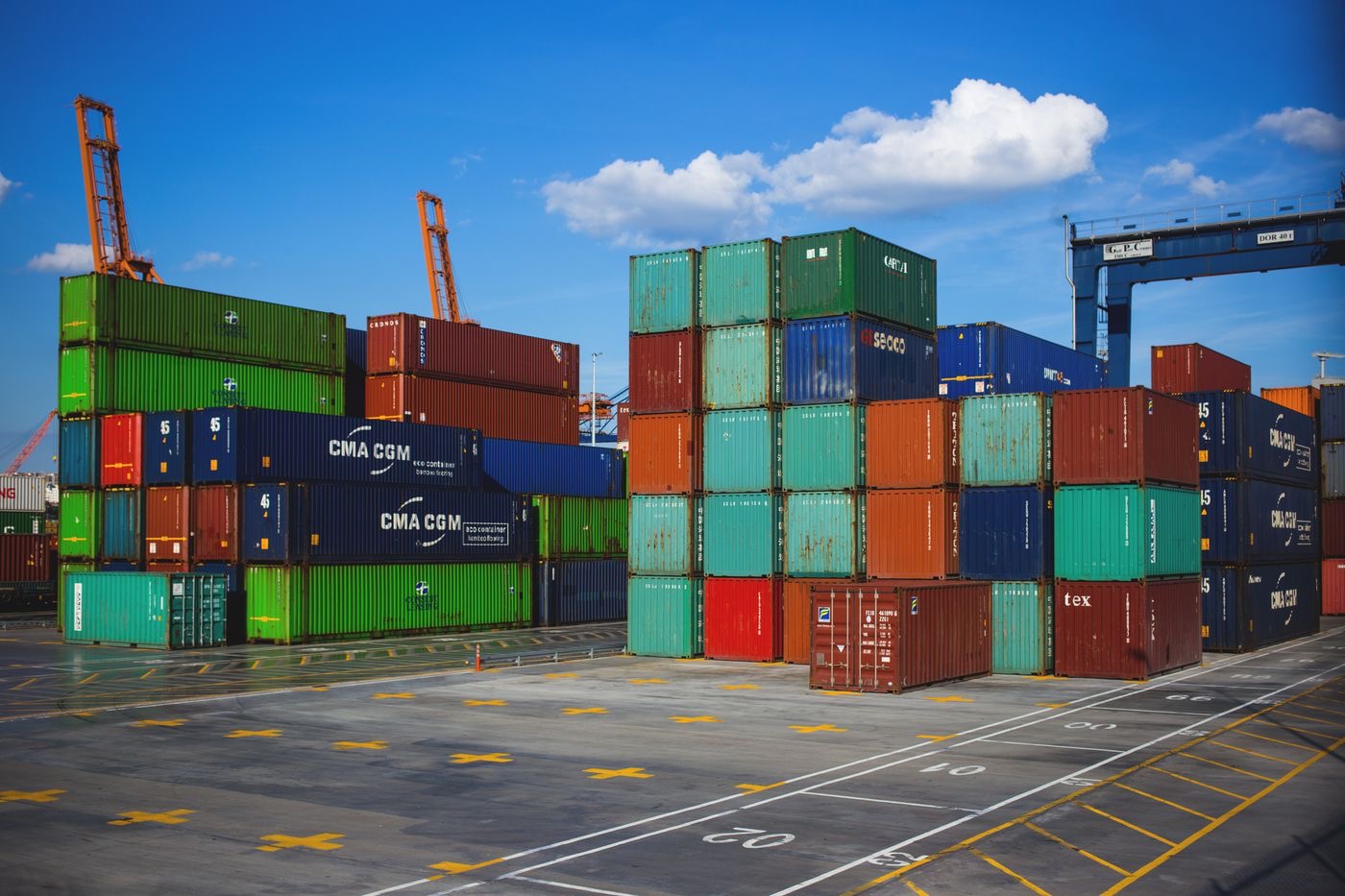
Every logistics website claims on-time delivery and zero demurrage. Almost none of them show you a terminal, a steamship line, or a Last Free Day. The three programmes below come out of our own dispatch system, with customer names removed and everything else left as it is — the terminals the boxes came off, the lines they arrived on, the dates, and how the outgate compared to the Last Free Day.

The freight. Nacelle components for a wind turbine manufacturer, bound for a plant in Brighton, Colorado. Thirty containers, 20' and 40', every one of them off Husky Terminal at the Port of Tacoma, every one on Maersk, between 14 and 31 July 2026.
The problem. Thirty containers in seventeen days off a single terminal is roughly two boxes every working day, and every one of them had to leave the Pacific Northwest entirely. That is not drayage in the ordinary sense — it is a port pull feeding a long-haul programme, and the two halves have to be scheduled as one thing. A truck that pulls a box on Tuesday and cannot get a driver for the outbound until Friday has just bought three days of per-diem for nothing.
The risk. Terminal appointment capacity. Husky, like every NWSA terminal, releases gate slots in limited windows, and a programme needing two slots a day for three weeks competes with everyone else's freight for them. Lose a day of appointments and the backlog does not recover on its own — it pushes every remaining box one day closer to its Last Free Day, and the last containers in the sequence have the least slack.
What we did. Booked gate appointments as a block rather than one at a time, and paired each pull with a committed outbound before the box came off the terminal. Where the plant's schedule slipped, the container came to our yard rather than staying at Husky — cheaper, and it frees the terminal slot for the next one.
The result. All thirty moved inside the seventeen-day window off a single terminal, at roughly two a working day, with the outbound leg committed before each pull. Six of the thirty carry both a terminal Last Free Day and our own outgate timestamp in the system; all six went out on or before the Last Free Day. The other twenty-four are not recorded either way, and we are not going to claim them.
Oversize and out-of-gauge pieces on programmes like this run on our open-deck equipment — see oversize and project cargo.
The freight. The steadiest work we do: import containers pulled off the terminals and delivered into our own Kent warehouse for devanning, storage and outbound distribution. 145 containers in the current book, arriving off Husky, Terminal 18, Terminal 5 and the Alaska Marine Lines berth, on six different steamship lines — CMA CGM, COSCO, Hapag-Lloyd, MSC and both Yang Ming services.
The problem. Six lines means six different free-time allowances, six sets of empty-return rules, and six opinions about which depot will take the equipment back. Four terminals means four appointment systems. There is no single batch to plan — just a continuous stream of individual containers, each with its own clock.
The risk. Attrition, and the fact that it is invisible. Nobody loses a hundred containers to demurrage in one catastrophe. They lose them two at a time, on the days when an arrival notice sat unread, or a box came off a terminal nobody was watching, or an empty went back to a depot that refused it and came home on the chassis.
What we did. One board, all four terminals, every container carrying its own Last Free Day where the terminal publishes one. Because the delivery address is our own dock, the receiving appointment is never the constraint — which removes the single most common reason an import sits at a terminal past its free time.
The result. This is the programme that makes the rest possible: a container can be pulled the day it releases, because there is always somewhere to put it. See transloading and cross-docking and freight warehousing.
The freight. Building products for a manufacturer in Ferndale, Washington — about 110 miles north of Seattle and twenty minutes from the border. 27 containers off Terminal 18, Terminal 5 and Washington United Terminals, on four lines: COSCO, MSC, ONE and OOCL.
The problem. Ferndale is the awkward distance. It is too far for the comfortable same-day round trip that the Kent Valley allows, and not far enough to be priced or planned as a long haul. A container going north is out of the terminal for most of a driver's day, which means per-diem, chassis and truck are all committed to one box.
The risk. Pairing. A truck that runs to Ferndale loaded and comes back empty has burned a day carrying one container. Do that twenty-seven times and the lane costs far more than it should — and that cost lands either on the customer's rate or on our margin.
What we did. Batched northbound deliveries so the trip is worth making, and watched the empty-return side as carefully as the delivery: four steamship lines return to different places, and sending a driver 110 miles south with an empty that the depot will not accept is the expensive version of this mistake.
The result. A steady northbound lane run out of three terminals across four lines, with the same dispatcher owning the box from release to empty return.
The result lines above compare the terminal's Last Free Day against our own outgate timestamp — the moment the container physically left the terminal gate. If the outgate is on or before the LFD, the box did not accrue demurrage. That is a real, checkable measure rather than a satisfaction score.
Three honest caveats. First, these are Ad Hoc Logistics loads only. Our dispatch system is shared with an affiliated carrier, and their containers are excluded from every figure on this page. Second, not every load carries both dates: across the Ad Hoc book, 197 containers have both an LFD and an outgate timestamp recorded, and of those 189 — 95.9% — went out on or before the Last Free Day. The other eight did not. Third, outgating on time prevents demurrage; it does not prevent per-diem, which keeps running until the empty is back. They are different charges with different causes, and anyone who conflates them in a sales pitch is either confused or counting on you being.
If you want to know what your own numbers look like, that is a fair question to ask any carrier you already use. Most cannot answer it.
Yes. Container counts, terminals, steamship lines and dates come straight out of our dispatch system. Customer names are removed because that is theirs to disclose, not ours. Everything else is as recorded.
16 containers off three terminals in one day, on 5 August 2026.
Yes. Of the Ad Hoc containers in our book with a recorded gross weight, about one in sixteen is over 44,000 lbs. See overweight container drayage in Washington.
Yes. The mechanics are identical whether it is four containers or forty — the Last Free Day still has to be on somebody's board.
Yes, and we would rather do it before you book. On long inland lanes a transload onto a domestic trailer is often cheaper than running the box — see our inland lanes and transloading.
Measured, not claimed
That is the whole discipline. The rest is showing up at the gate on the day you said you would.
Send us a containerTell us the container count, the terminals and where it has to end up. You will get a straight answer the same day, including if the answer is that someone else is a better fit.
Talk to us